
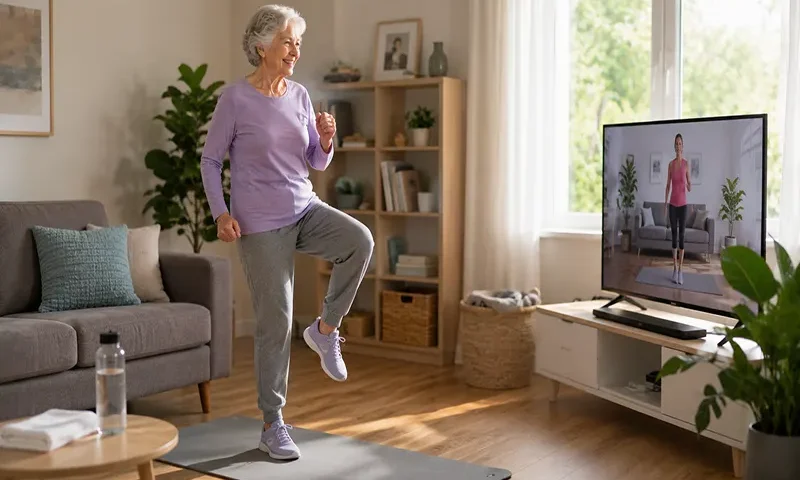
Maintaining cardiovascular health is one of the most significant factors in aging well. Regular aerobic activity strengthens the heart, improves lung capacity, boosts mood, and enhances overall stamina. However, for many seniors, traditional high-impact cardio—like running or jumping—can be hard on the joints, leading to unnecessary aches or even injury.
“Low-impact” does not mean “low-results.” By choosing activities that elevate your heart rate while keeping at least one foot on the ground, you can achieve all the benefits of cardio without the jarring stress on your knees, hips, and ankles. Staying active at home is not only possible; it is a safe, effective, and convenient way to preserve your independence and keep your body moving smoothly.
Safety First: Preparing Your Body
Before beginning any new exercise regimen, always consult with your physician to ensure the activities align with your specific medical history.
- The “Talk Test”: When exercising, you should be able to carry on a conversation. If you are gasping for air and cannot speak, you are working too hard—dial it back.
- Warm-Ups and Cool-Downs: Never skip these. A 5-minute warm-up of gentle marching or shoulder rolls lubricates the joints and prepares your heart for activity. Similarly, a cool-down prevents blood from pooling in your legs and helps your heart rate return to normal gradually.
- Listen to Your Body: If you feel lightheaded, experience sudden sharp pain, or feel pressure in your chest, stop immediately.
The Best Home-Based Cardio Moves
You do not need a gym membership or expensive machinery to get your heart pumping.
Seated Exercises (Excellent for balance concerns):
- Seated Marching: Sit tall in a sturdy chair. Lift your knees one at a time, pumping your arms as if you are walking. Aim for a brisk pace.
- Arm Circles: Extend your arms to the sides and make small, continuous circles. This engages the upper body and elevates the heart rate.
- Seated Knee Extensions: While sitting, straighten one leg at a time, squeezing the thigh muscle. Alternate legs at a steady, rhythmic pace.
Standing/Supported Exercises:
- Supported Side-Steps: Hold the back of a sturdy, non-rolling chair. Step one foot out to the side, then bring it back. Alternate sides. This improves balance while getting the heart moving.
- Wall Push-Offs: Stand facing a wall, place your hands flat against it, and perform gentle, rhythmic push-offs. It is an excellent way to engage the upper body while increasing your heart rate.
- Toe Taps: Hold your support chair and tap one foot forward, then back, then to the side. Keep it rhythmic and continuous.
Creating a Consistent Routine
The key to success is the “150-Minute Rule.” Health organizations recommend 150 minutes of moderate aerobic activity per week. This sounds daunting, but it breaks down to just 22 minutes a day. Even better, you can split this into three 10-minute bouts throughout the day—such as once after breakfast, once after lunch, and once before dinner.
Use your favorite television show as a timer. During every commercial break, stand up and do 3–5 minutes of your chosen cardio moves. By the time the show ends, you will have completed a full workout without it feeling like a “chore.”
Equipment and Environment
Keep your home gym minimalist and safe:
- Footwear: Never exercise in socks on hard floors or carpets, as this is a major tripping hazard. Wear supportive sneakers with non-slip soles.
- Clearing the Space: Ensure your exercise area is free of rugs, electrical cords, or clutter.
- The Chair: Always use a heavy, non-rolling, stable chair without wheels for any supported exercises.
Safety Callout: When to Stop
Stop your exercise immediately if you experience:
- Dizziness or feeling lightheaded.
- Sharp, stabbing joint pain (different from muscle soreness).
- Pressure or pain in the chest, neck, or jaw.
- Shortness of breath that does not subside with a brief rest.
Pro-Tip: The Buddy System
Loneliness is a common barrier to staying active. Use technology to your advantage—set up a video call with a friend or family member and do your home exercises together “virtually.” Having a dedicated time to meet keeps you accountable, makes the time pass faster, and adds a layer of safety by having someone aware that you are exercising.
Consistency beats intensity every single day. You do not need to push your body to the limit to reap the benefits of cardiovascular health. By incorporating these low-impact movements into your daily life, you are choosing to prioritize your longevity. Every 10 minutes of movement is a down payment on your future mobility, ensuring that you retain the strength and stamina to live life on your own terms. Start small, stay steady, and celebrate the fact that you are taking control of your health right from the comfort of your own home.

